RHINO project will establish the foundation of a new electrified paradigm for the chemical industry that will allow the integration of renewable energy sources and the decarbonisation of this energy-intensive sector.
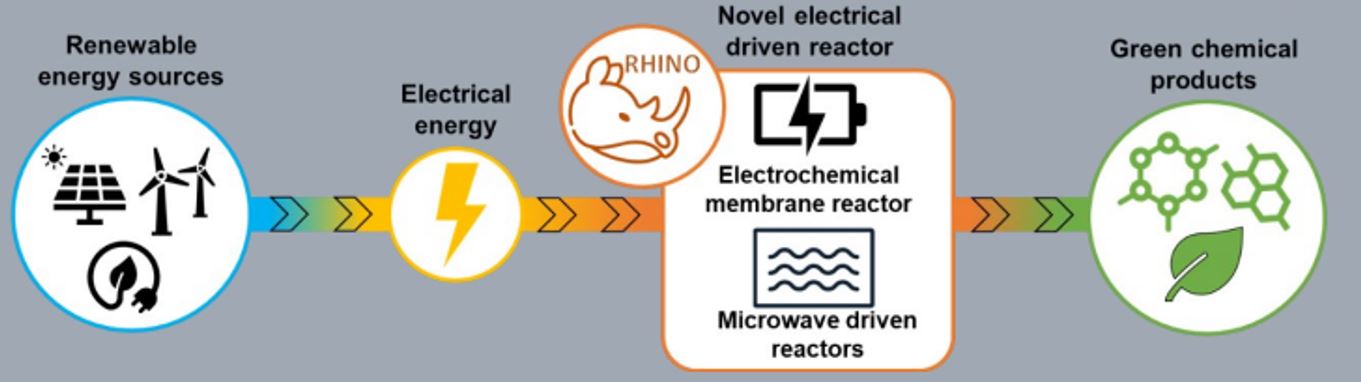
Rhino’s approach to electrifying the chemical industry is the use of electrochemical reactors that give the chance to employ electric power to supply the energy required by a chemical reaction with high selectivity. RHINO will break the current barriers to create an entirely new class of electrified catalytic reactors for the chemical industry sector with an innovative interdisciplinary approach combining cutting-edge nanomaterials and interface engineering, a fundamental understanding of kinetics and microwave interaction with materials, as well as multi-physics modelling.
Two novel electrical-driven reactors will be addressed in the Rhino project.
IMPACT
The European Green Deal aims to make Europe climate neutral by 2050, boost the economy through green technology, create sustainable industry and transport, and cut pollution. The chemical industry is among the most significant fossil energy consumers. Considering the 135 million tons of CO2 it releases into the atmosphere annually and its meagre 1% renewable energy share, the chemical industry is one area that must be urgently addressed.
Electrification of chemical industry, replacing technologies and processes that do not use electricity with ones that do, coupled with renewable electricity supply, are key elements in the green transition towards a deep decarbonisation of our economy and society. The expected outcome of the project encompasses the proof of concept of a series of reactor technologies that will allow the electrification, intensification and efficient operation of several chemical processes of industrial interest.
The advancement and application of such technologies will be accompanied by immediate benefits as decreased industrial GHG emissions and energy intensity and a more dynamic renewable grid. RHINO’s vision is that the journey to full industrial electrification will involve widespread adoption of electrified reactors technology. But to realise their full potential, their application must be pushed into previously unthought of territory. RHINO will provide that essential initial push to unlock an unprecedented industrial future.
Get in touch with us
Have a question or feedback about RHINO?